How to Clean Solar Panels on Roof: Complete Homeowner Guide

how to clean solar panels on roof

Properly maintaining your rooftop solar panels ensures they keep delivering maximum power output throughout the year. Whether you own a small residential system or a larger setup like a 10 kW solar system, cleaning your panels the right way protects your investment and boosts long-term performance. This guide explains exactly how to clean solar panels on roof, how to do it safely, and how to clean solar panels on roof automatically using modern solutions.

Why Cleaning Solar Panels Matters

Dust, bird droppings, pollution, pollen, and leaves block sunlight from reaching your solar cells. Even a thin film of dirt can reduce efficiency by 5% to 20%. Over time, this leads to higher electricity bills and lower system ROI.

For homeowners with popular systems such as a 5 kW solar system, this loss can accumulate significantly over the year, making regular cleaning essential.

How Often Should You Clean Solar Panels on Roof?

Most Australian homes only require cleaning once or twice a year, but frequency depends on:

  • Local weather conditions

  • Pollution levels

  • Proximity to coastal areas

  • Trees or bird activity

  • Whether the system uses an automatic cleaning solution

Homes with a 6 kW solar system installed in dusty regions may require more frequent maintenance.

Safety First: Preparing to Clean Solar Panels on Roof

Before starting any cleaning routine, safety must come first.

Check Manufacturer Guidelines

Always check your system’s warranty and cleaning recommendations. Some panels specify particular detergents or water-pressure limits.

Turn Off the Solar System

Switch off your inverter before cleaning. This is especially important for larger setups such as a 6.6 kW solar system, which carry higher voltage levels.

Use the Right Equipment

Recommended tools include:

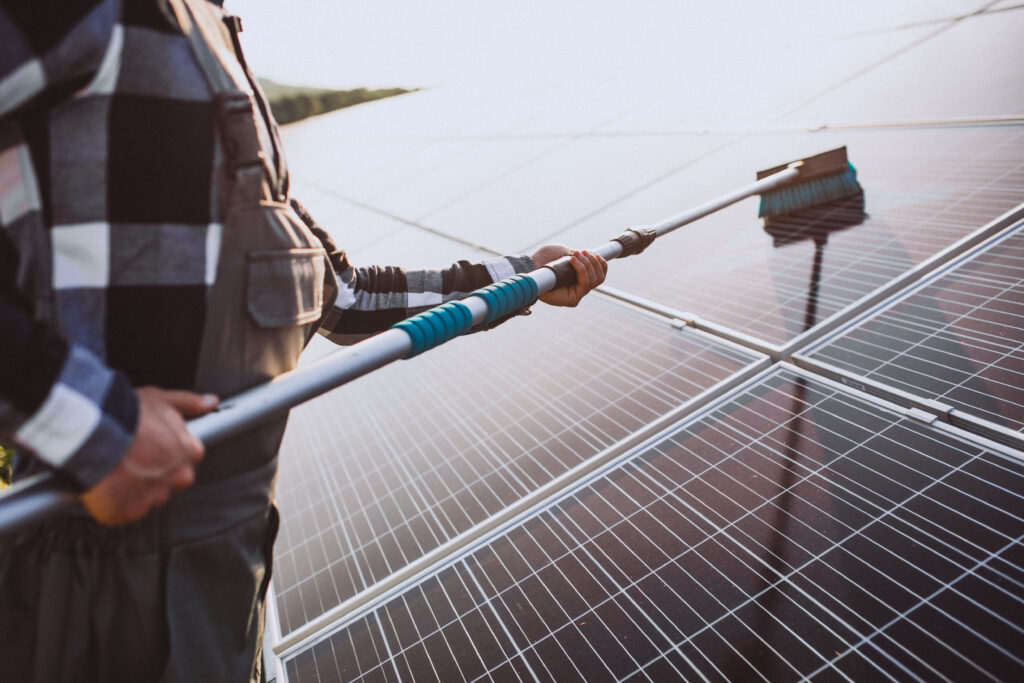
  • A long telescopic pole

  • Soft brush or sponge

  • Microfibre cloth

  • Bucket of clean water

  • Mild, non-abrasive detergent

Avoid abrasive cleaners, metal tools, or harsh chemicals.

Step-by-Step: How to Clean Solar Panels on Roof

1. Rinse Panels with Clean Water

Use a garden hose to gently remove loose dirt, dust, and debris. Never use high-pressure cleaners, as they can damage the glass surface.

2. Apply Mild Soap Solution

Use a soft brush to gently apply a diluted soap mixture. Work in circular motions to avoid streaking.

3. Gently Scrub and Wipe

Remove stubborn stains such as bird droppings or sticky leaves. Avoid pressing too hard, as unnecessary pressure may crack the glass.

4. Rinse Thoroughly

Ensure all soap residue has been removed to prevent smudges that can affect sunlight absorption.

5. Allow Panels to Air Dry

Panels naturally dry quickly in the sun, reducing the risk of streak marks.

For homeowners with larger arrays like a 10 kW solar system, working in small sections helps keep cleaning manageable and safe.

How to Clean Solar Panels on Roof Automatically

Modern solar homes are moving toward automated cleaning solutions that reduce the need for physical access to the roof. Automatic cleaning systems work especially well for high rooftops, commercial installations, and homes in dusty locations.

Types of Automatic Cleaning Solutions

Robotic Solar Panel Cleaners

These devices run along the panels, brushing and wiping surfaces without the need for water.

Water Drip or Spray Systems

Installed along the panel edges, these systems periodically release water to clean off accumulated dirt.

Self-Cleaning Coatings

Hydrophobic coatings reduce dust buildup and allow rainwater to wash off contaminants naturally.

Automatic cleaning is ideal for homeowners who want low-maintenance upkeep or those with difficult roof access.

Common Mistakes to Avoid When Cleaning Solar Panels

  • Using high-pressure washers

  • Using strong detergents

  • Cleaning during the hottest part of the day

  • Standing directly on panels

  • Letting water spots dry and create marks

Avoiding these mistakes helps extend your system’s lifespan and efficiency.

Additional Maintenance Tips for Long-Term Performance

  • Trim nearby trees to reduce leaf accumulation

  • Monitor inverter output regularly

  • Check wiring and mounting hardware annually

  • Inspect after severe storms

  • Schedule professional maintenance when needed

Final Thoughts

Learning how to clean solar panels on roof is essential for maximising your system’s output and lifespan. Whether you prefer manual cleaning or exploring how to clean solar panels on roof automatically, maintaining your system regularly ensures you continue saving on energy bills and generating clean power all year round.

For high-performance solar installations, maintenance advice, or expert guidance, visit Esteem Energy for trusted solutions tailored to Australian homes.

Frequently Asked Questions​

Yes. Dirt and debris block sunlight and reduce efficiency, especially in dusty or coastal areas.

Early morning or late afternoon when panels are cool.

Rain helps but does not remove hardened dirt or bird droppings.

Most residential systems can be cleaned in 30 to 60 minutes.

Yes, especially for hard-to-reach roofs or regions with frequent dust buildup.

No. Walking on panels can cause cracks and void warranties.

Fastest & Most Secure way to
get Clean & Safe Renewable
Energy -1300 748 841

How to Clean Solar Panels on Roof: Complete Homeowner Guide Read More »

How Much Will a 6.6kW Solar System Save Me in Australia? (2025 Guide)

how much will a 6.6kw solar system save me

A 6.6kW solar system remains one of the most popular residential solar choices in Australia. With power prices at all-time highs and solar rebates still available, more homeowners are asking the same question: How much will a 6.6kW solar system save me?

In this guide, we break down real savings, output by state, system costs, government rebates, and how many panels a 6.6kW system typically includes. We also compare similar system sizes such as the 6kW solar system and larger options like a 10kW solar system so homeowners can make an informed decision.

What Is a 6.6kW Solar System?

A 6.6kW solar system consists of solar panels and an inverter with a total generation capacity of 6.6 kilowatts. It’s ideal for households using 15–25 kWh per day, typically families of 3–5 people.

It is often chosen over a 5kW solar system because the additional capacity provides significantly higher daily savings for only a small cost increase.

A standard setup includes:

  • 15–18 solar panels

  • A 5kW inverter

  • Roof space of approximately 25–35 m²

  • Grid connection with optional battery storage

How Many Panels Are in a 6.6kW Solar System?

The number of panels depends on panel wattage.

Typical Panel Calculations

  • 370W panels → around 18 panels

  • 440W panels → around 15 panels

Most modern Australian homes use higher-efficiency panels, reducing roof space requirements while increasing overall generation.

The total roof space required ranges from 25 to 35 square metres, depending on orientation and shading.

How Much Power Does a 6.6kW Solar System Produce?

The output of a 6.6kW solar system varies by state due to weather and sunlight exposure.

Average Daily Output by State

  • Queensland: 24–28 kWh/day

  • New South Wales: 22–26 kWh/day

  • Victoria: 18–22 kWh/day

  • South Australia: 22–27 kWh/day

  • Western Australia: 23–28 kWh/day

  • Tasmania: 15–19 kWh/day

Your system’s performance depends on:

  • Roof direction (north-facing produces the most energy)

  • Shading and tree cover

  • Panel quality

  • Inverter efficiency

  • Local climate

  • Temperature and weather trends

A well-installed system from a professional provider can ensure maximum output year-round.

How Much Will a 6.6kW Solar System Save Me in Australia?

Savings vary by household consumption, local electricity rates, and how much solar energy you use during the day.

Average Annual Savings

Most households can expect $1,500 to $2,400 in yearly savings, depending on state and energy usage patterns.

Breakdown of Savings

Savings come from two sources:

  1. Self-consumption
    Power used directly from solar instead of buying from the grid

  2. Feed-in Tariffs (FITs)
    Excess electricity exported back to the grid

Example for an average NSW family:

  • Daily generation: 22 kWh

  • Self-consumption: 12 kWh

  • Export: 10 kWh

  • Savings from self-use: 12 kWh × $0.34 = $4.08/day

  • Savings from FIT: 10 kWh × $0.06 = $0.60/day

  • Total daily savings: $4.68/day

  • Annual savings: approx $1,700/year

A household with higher daytime usage can save over $2,000 per year.

Cost of a 6.6kW Solar System in Australia (2025 Prices)

As of 2025, the average cost of a 6.6kW solar system ranges from:

$4,500 to $9,000 installed

Pricing depends on:

  • Panel quality (budget vs premium)

  • Inverter brand

  • Labour and installation difficulty

  • Roof type and orientation

  • Whether batteries or optimisers are included

In many cases, the cost difference between a 6.6kW system and a 6kW solar system is minimal, making the 6.6kW system a better value for long-term savings.

Government Rebates and STC Incentives

Government incentives significantly reduce the upfront cost.

For a 6.6kW system:

  • STC rebates typically reduce the cost by $2,000 to $3,000

  • Additional state incentives may apply, depending on location

Eligibility is based on:

  • System size

  • Approved installers

  • Clean Energy Council regulations

  • Installation location

This makes solar more accessible and increases return on investment.

How Much Roof Space Do You Need for a 6.6kW Solar System?

A 6.6kW system with 15–18 panels usually requires:

25 to 35 m² of roof space

Other considerations:

  • North-facing roofs produce the highest output

  • East/west-facing roofs produce slightly less but still perform well

  • Shaded roofs may require micro-inverters or optimisers

If your property has limited roof space, a higher-capacity option like a 10kW solar system using high-efficiency panels can sometimes be more practical.

Key Factors That Impact Savings

Savings depend on:

1. Electricity Prices

Higher retail rates increase savings over time.

2. Feed-in Tariffs

FITs vary from 5–12 cents per kWh depending on the provider.

3. Solar Self-Consumption

Using more power during the day (e.g., running appliances) increases savings.

4. Quality of Installation

Professional installation ensures peak performance and maximum savings.

5. Seasonal Weather

High summer generation boosts annual output.

6. System Type

A system paired with a battery can further increase self-consumption.

Should You Add a Battery for Higher Savings?

A battery can significantly increase savings by storing excess daytime solar energy for night use.

Benefits of adding a battery:

  • Higher energy independence

  • Reduced reliance on retailers

  • Backup power during outages

  • Better long-term savings

A 6.6kW solar system paired with a moderately sized battery is one of the most effective setups for households that want to reduce their energy bills by up to 80%.

Is a 6.6kW Solar System Right for Your Home?

A 6.6kW solar system is ideal if:

  • Your household uses 15–25 kWh/day

  • You have enough roof space

  • You have daytime energy usage

  • You want a 3–4 year payback period

  • You want strong long-term savings

  • You plan to add a battery later

If your usage is higher, consider upgrading to a 10kW solar system for more flexibility and greater future-proofing.

Conclusion

A 6.6kW solar system offers impressive savings, affordable installation costs, and reliable power generation across Australia. With government rebates still available and strong yearly savings of $1,500 to $2,400, it remains the most cost-effective solar size for families.

If you want to reduce your bills, increase your energy independence, and future-proof your home, a high-quality 6.6kW solar system is one of the smartest investments you can make.

Ready to maximise your savings with a professionally installed solar system?

Request your free quote from Esteem Energy today and discover how much a 6.6kW solar system can save you.

Frequently Asked Questions​

Between $1,500 and $2,400 per year, depending on your state and usage.

Typically 15 to 18 panels, depending on wattage.

Most systems pay back in 3 to 5 years.

You need 25–35 square metres of unshaded roof area.

Not required, but a battery increases savings and energy independence.

Yes. For only a small price difference, a 6.6kW system produces significantly more energy than a 5kW solar system, increasing both savings and long-term ROI.

Fastest & Most Secure way to
get Clean & Safe Renewable
Energy -1300 748 841

How Much Will a 6.6kW Solar System Save Me in Australia? (2025 Guide) Read More »

How Do Solar Panels Work With Your Electric Bill? A Complete Guide for Homeowners

how do solar panels work with your electric bill

For most homeowners, the biggest motivation for switching to solar energy is the promise of lower electricity bills. But understanding exactly how solar panels work with your electric bill can help you make smarter decisions about the system size, energy usage, and long-term savings. This guide explains the full process in simple terms—how solar panels generate energy, how that energy interacts with your utility bill, and how various system sizes impact your financial benefits.

Along the way, you’ll also see examples of real-world system options such as a 2kW solar system, a 13.3 kW solar system, and even larger residential setups like a 10.5 kW solar system or a 19.5 kW solar system, all to help you understand how your solar choice influences your bill.

Understanding How Solar Panels Work

Before you understand how solar panels affect your utility bill, it’s important to know how solar panels work.

How Solar Energy Is Generated

Solar panels absorb sunlight and convert it into direct current (DC) electricity. An inverter then transforms that DC energy into usable alternating current (AC) power for your home appliances. This is the same type of electricity your utility provider supplies.

Solar Energy Consumption vs. Grid Consumption

During the day, your solar system produces electricity. Your home uses this solar energy first, reducing the amount of electricity you need from the grid.
If your system produces more power than your home needs, the excess energy is exported to the grid, earning you credits through net metering (depending on your regional policy).

How Solar Panels Work With Your Electric Bill

Once your solar system is installed, your electric bill changes in several ways.

Reduction in Grid Usage

The primary way solar panels reduce your bill is by lowering the amount of electricity you buy from your utility company. Even smaller systems, such as a 2kW solar system, can offset part of your daytime consumption.

Net Metering and Bill Credits

In many regions, when your panels produce more electricity than you use, that extra power is fed back into the grid. Your utility provider then gives you credits that offset your future electricity usage.
Larger systems such as a 13.3 kW solar system often generate enough surplus power during sunny months to significantly reduce or even eliminate bills.

Understanding the Daily Supply Charge

Even with solar, you still pay a daily supply or service charge. This fixed cost is unrelated to energy usage and remains on your bill regardless of how much solar power you generate.

How System Size Influences Your Electricity Bill

Choosing the right system size has a major impact on how much you save.

Small Solar Systems

Smaller systems such as a 2kW solar system are suitable for low-consumption homes. These systems reduce daytime usage and lower bills, but may not eliminate them completely.

Medium-Sized Solar Systems

A mid-range setup such as a 10.5 kW solar system can cover the majority of energy needs for an average family home with appliances, air conditioning, and regular daytime consumption.

Larger Solar Systems

Larger installations such as a 19.5 kW solar system provide substantial surplus energy, making them ideal for homes with high energy use, pools, EV charging, or extended family arrangements.

What Happens to Your Bill at Night and on Cloudy Days?

Solar panels only generate electricity when the sun is shining. At night or during cloudy weather, your home relies on the grid. If your daytime excess energy earns you credits through net metering, these credits can offset nighttime usage, keeping your bill low.

How Smart Meters Change the Way Your Bill Looks

Your utility company uses a smart meter to monitor:

  • Solar energy generated

  • Solar energy exported to the grid

  • Energy imported from the grid

This allows them to calculate your charges or credits accurately. With a system like a 13.3 kW solar system, exports can be substantial enough to offset most nighttime costs.

Why Monitoring Your Solar System Matters

Monitoring tools help you understand production trends, energy consumption, and savings. This ensures your system continues performing optimally and helps you adjust usage to reduce your bill even further.

Final Thoughts: Will Solar Panels Eliminate Your Electric Bill?

In many cases, yes — depending on your system size, consumption habits, and sunlight availability. Homes that invest in well-sized systems like a 10.5 kW solar system or 19.5 kW solar system often achieve near-zero electricity bills across much of the year.

However, even if a small residual supply charge remains, solar panels significantly reduce long-term energy expenses and protect households from rising utility rates.

Ready to lower your electricity bill with a well-designed solar system? Explore reliable system options and get expert assistance from Esteem Energy to find the ideal setup for your home.

Frequently Asked Questions​

Not always. You still pay a small supply charge, but a properly sized system can eliminate usage charges and dramatically reduce costs.

Most grid-connected systems shut down during outages unless paired with a battery backup.

Most systems offer payback within 3–6 years depending on usage, size, and local electricity rates.

Yes, but output is reduced. Excess generation during sunny days typically compensates for cloudy periods.

Sizes between 6.6 kW and 13.3 kW are common, depending on household consumption.

Generally, yes — especially if you have high daytime usage or plan to add EV charging, pools, or electric heating.

Fastest & Most Secure way to
get Clean & Safe Renewable
Energy -1300 748 841

How Do Solar Panels Work With Your Electric Bill? A Complete Guide for Homeowners Read More »

What Are the Best Solar Panels in Australia? A Complete 2025 Guide

what are the best solar panels in australia

Choosing the right solar panels can make a significant difference in long-term performance, return on investment, and overall energy independence. As solar adoption increases across Australia, homeowners are asking two key questions: what are the best solar panels in Australia, and what is the best brand of solar panels in Australia in 2025?

This detailed guide examines the top-performing solar panel options, the factors that define panel quality, and how to select the right system for your home based on efficiency, durability, and budget.

Understanding What Makes a Solar Panel “The Best”

The Key Features That Matter Most

When determining what are the best solar panels in Australia, it’s important to focus on the features that directly impact output and long-term savings:

1. High Efficiency

Premium panels typically fall above 21% efficiency, delivering more power from limited roof space.

2. Temperature Coefficient

Panels with lower temperature coefficients perform better in Australia’s hot climate.

3. Warranty Coverage

The best solar brands offer 25–30 year product and performance warranties.

4. Degradation Rate

Top-tier panels degrade slower, helping maintain high output for decades.

What Is the Best Brand of Solar Panels in Australia?

Leading Solar Panel Brands for 2025

Australia’s top-performing brands consistently include:

SunPower

Recognised for industry-leading efficiency and long-term durability.

REC

Known for reliable performance and strong warranty coverage.

Jinko Solar

A widely trusted and cost-effective Tier 1 manufacturer.

Qcells

Excellent for Australian conditions and backed by strong innovation.

Each brand brings its own strengths, but the best choice ultimately depends on your installation requirements, available roof space, and system size.

Choosing the Right Solar System Size in Australia

Matching System Sizes to Household Needs

Selecting the best panel brand is only half the equation—you also need the right system size.

Small Homes or Low Usage

A compact solution such as a 2kW solar system can be suitable for households with minimal daytime electricity consumption.

Medium to Large Homes

For families seeking higher energy independence, a 10.5kW solar system offers excellent coverage for everyday use, appliances, and moderate air-conditioning.

Larger Families or EV Owners

High-demand households often benefit from a 13.3kW solar system, delivering substantial output throughout the year.

Homeowners with Very High Usage

Properties with heavy consumption or multiple EVs can consider a 19.5kW solar system to maximise their renewable energy production.

Factors That Influence Solar Panel Performance in Australia

Climate Conditions

Australia’s sunlight levels are ideal for solar, but heat can impact efficiency. Panels engineered for low temperature coefficients will perform better during hot summers.

Roof Orientation and Shading

Even the best brands won’t deliver optimal performance if shading or improper tilt angles are an issue.

Inverter Compatibility

Quality inverters paired with high-performing panels ensure consistent system efficiency.

Installation Quality

Proper installation is essential. The best panels must be installed by accredited professionals to ensure warranty compliance and long-term reliability.

Do Premium Panels Always Mean Better Value?

Understanding Long-Term ROI

While premium panels cost more upfront, they deliver higher energy output and better durability, which translates into long-term savings. However, budget-conscious homeowners can still achieve good performance with reliable mid-range brands—especially when matched with an appropriately sized system.

Final Thoughts: So, What Are the Best Solar Panels in Australia?

The best panels for 2025 come from globally trusted brands such as SunPower, REC, Jinko, and Qcells. Determining what is the best brand of solar panels in Australia for your home depends on your budget, roof characteristics, energy goals, and the durability you expect.

Finding the right balance between performance, efficiency, warranty, and cost is key—and pairing your chosen panels with the correct system size ensures maximum long-term value.

Ready to Install the Best Solar Panels for Your Home?

If you’re ready to upgrade your home with high-performance solar panels and the right system size, Esteem Energy can help you choose the perfect solution tailored to your energy needs. Reach out today for expert guidance and a personalised quote.

Frequently Asked Questions​

High efficiency, strong warranties, good heat performance, and low degradation rates are the major determining factors.

Premium brands like SunPower and REC are known for exceptional durability and 25–30 year warranties.

Not necessarily. Your ideal system should match your energy usage and roof capacity.

Tier 1 refers to manufacturer stability, not panel performance. Buyers should still review efficiency, warranties, and tests.

Yes, panels still generate power, though output is lower due to reduced sunlight.

Look for Clean Energy Council accreditation, genuine customer reviews, and transparent system recommendations.

Fastest & Most Secure way to
get Clean & Safe Renewable
Energy -1300 748 841

What Are the Best Solar Panels in Australia? A Complete 2025 Guide Read More »

10kW Solar System With Battery Price in Australia (2025 Guide)

10kw solar system with battery price

A 10kW solar system with battery is one of the most efficient and future-proof solutions for Australian households wanting to reduce electricity bills and gain energy independence. Rising power tariffs and improved technology have made battery-backed solar systems more accessible, financially attractive, and extremely reliable.

This guide explains the 10kW solar system with battery price, expected output, ideal battery size, rebates, benefits, and the best alternatives available.

What Is a 10kW Solar System With Battery?

A 10kW solar power system includes:

  • High-efficiency solar panels

  • A hybrid or standard inverter

  • Battery storage (10–15 kWh recommended)

  • Mounting hardware

  • Monitoring system

  • Professional installation & grid connection

Pairing solar panels with battery storage allows homeowners to use stored renewable energy even after sunset, during peak tariff hours, or during power outages.

10kW Solar System With Battery Price in Australia

The price of a 10kW solar system with battery depends on the battery brand, inverter quality, installation complexity, and panel selection.

Estimated Price Breakdown

Solar panels: $5,000–$7,500
Hybrid inverter: $1,500–$2,500
Battery storage (10–15 kWh): $7,500–$12,500
Installation & extras: $1,000–$2,000

Total estimated cost: $14,000 – $24,000

This range can vary based on factors like panel technology, roof type, switchboard upgrades, and whether a premium or budget battery is selected.

How Much Power Does a 10kW Solar System Produce?

A 10kW system in Australia generates around 38–45 kWh per day, depending on the state and local weather conditions.

Average Output by Region

  • NSW: 40–46 kWh/day

  • QLD: 42–48 kWh/day

  • VIC: 36–42 kWh/day

  • WA: 44–50 kWh/day

  • SA: 40–46 kWh/day

With a battery installed, you can store excess power to use whenever energy demand peaks.

Best Battery Size for a 10kW Solar System

Most homes pair a 10kW system with:

Recommended Battery Capacity

  • 10–13.5 kWh for average households

  • 15–20 kWh for large homes or high-energy users

Choosing the right size ensures you get maximum value from your solar system with battery price investment.

Benefits of a 10kW Solar System With Battery Storage

Lower Electricity Bills

Combining solar panels with battery storage allows you to power your home day and night using self-generated energy.

Protection During Blackouts

Battery-enabled systems can keep essential appliances running during outages.

Higher Energy Independence

You can reduce grid reliance by up to 85–95%, depending on usage patterns.

Improved ROI

A 10kW system with battery typically pays for itself within 6–9 years, especially for homes with high energy consumption.

Government Rebates and Incentives in Australia

Australia offers federal and state-level incentives that help reduce the upfront cost of solar and battery systems.

Federal STC Rebate

This rebate can reduce the system cost by $2,500–$4,000, depending on location and panel capacity.

State-Based Incentives

Depending on your state, you may also access:

  • Battery rebates

  • Virtual Power Plant (VPP) credits

  • Low-interest solar loans

These incentives make energy storage more affordable for Australian households.

Who Should Install a 10kW Solar System With Battery?

This system is ideal for:

  • Medium to large households

  • Homes with electric vehicles

  • Properties with high daytime usage

  • Families wanting blackout protection

  • Homes aiming for maximum bill reduction

Best Alternatives to a 10kW Solar System (Internal Links Included)

If you are exploring different system sizes, here are reliable alternatives:

A smaller 2kW solar system is ideal for households with minimal energy needs or limited roof space.

For a slight upgrade in performance, a 10.5 kW solar system delivers more daily output with similar roof requirements.

Larger homes or small businesses might benefit from a 13.3 kW solar system to manage higher energy consumption.

For properties with extremely high usage or multiple electric vehicles, a 19.5 kW solar system offers exceptional power generation and storage potential.

Choosing the Right Solar Installer in Australia

A high-quality solar installation is essential for system longevity and performance. Consider installers who offer:

  • CEC accreditation

  • Tier-1 panel brands

  • Hybrid inverter compatibility

  • Advanced battery solutions

  • Comprehensive warranties

  • Strong after-sales support

Selecting the right provider ensures your solar panels with battery storage perform efficiently for years to come.

Final Thoughts

A 10kW solar system with battery is one of the best long-term investments for Australian households. The combination of high output, strong savings, and reliable backup power makes it ideal for families looking to reduce electricity bills and secure a sustainable future.

Get Your Free Solar & Battery Quote!

Ready to switch to clean, reliable energy?

Contact Esteem Energy today for a free quote on a customised solar and battery installation tailored to your home and energy needs.

Frequently Asked Questions​

A 10kW solar system with battery typically costs $14,000 to $24,000 depending on the battery size, panel brand, and installation requirements.

In Australia, a 10kW system generates around 38–45 kWh per day, depending on location and weather.

Most homes pair a 10kW system with a 10–13.5 kWh battery, while larger families may prefer 15–20 kWh.

Yes, a 10kW system with storage can power most medium to large Australian homes, especially those with high daytime usage or electric vehicles.

Not always. Single-phase homes can install 10kW systems, but export limits may apply. Three-phase power offers better balance and higher export allowances.

The payback period usually ranges from 6 to 9 years, depending on energy usage, feed-in tariffs, and battery size.

Fastest & Most Secure way to
get Clean & Safe Renewable
Energy -1300 748 841

10kW Solar System With Battery Price in Australia (2025 Guide) Read More »

Understanding the Australian Solar Battery Rebate: A Complete 2025 Guide

Australian Solar Battery Rebate: Save ~30% Today

The australian solar battery rebate is transforming the way homeowners invest in clean energy. With rising energy prices and increased grid instability, more Australians are turning to solar + battery solutions to secure energy independence. But with each state offering different incentives, it can be confusing to understand exactly what rebates are available and how they apply to your home.

This guide breaks down everything you need to know about the australian government solar battery rebate, what’s expected to change in 2025, and how to choose the right system size for long-term savings.

What Is the Australian Solar Battery Rebate?

The australian solar battery rebate refers to state and federal incentives designed to lower the upfront cost of installing a home battery system. Across Australia, rebates are offered through programs such as:

  • State-based battery rebates

  • Virtual Power Plant (VPP) sign-on incentives

  • Low-interest renewable energy loans

  • Feed-in tariff benefits when paired with solar

While not all states run identical programs, most offer some combination of rebates and finance support.

Australian Government Solar Battery Rebate 2025: What to Expect

As energy demand grows and the national grid becomes more reliant on renewables, the australian government solar battery rebate 2025 is expected to improve rather than phase out. Based on current federal energy policy, analysts expect:

Increased subsidy levels in high-demand states

States such as SA, VIC, and NSW are likely to continue offering rebates or low-interest loans because of the strong push for grid stability.

More VPP-style incentive programs

VPPs allow homeowners to earn financial credits by allowing energy providers to access stored battery power during peak events.

Incentives tied to battery capacity

Larger systems may receive higher rebates, encouraging homeowners to choose storage options that support grid balancing.

Who Qualifies for the Battery Rebate?

Eligibility can vary by state, but most programs require:

  • A grid-connected property

  • A homeowner or landlord application

  • A compliant, approved battery installation

  • Solar panels already installed (or installed alongside the battery)

If you’re adding a battery to an existing solar system, make sure your inverter is compatible or upgrade-ready.

Choosing the Right Solar + Battery System for Your Home

The right battery size depends on your household’s energy usage and solar generation. Many Australian homeowners pair their battery with an appropriately sized solar system such as:

Matching your battery capacity to your solar panel capacity helps ensure you generate and store enough power to maximise savings.

How Much Can You Save With the Rebate?

Savings vary based on your state and the size of your solar + battery solution. However, many households save:

  • $3,000–$6,000 through battery rebate programs

  • $600–$2,000 per year in reduced electricity bills

  • Additional income when joining a VPP

With electricity prices continuing to rise, these savings make batteries more attractive than ever.

Why Installing a Battery in 2025 Is a Smart Move

Reduced reliance on the grid

Store solar energy during the day and use it at night.

Protection from blackouts

Keep essential appliances running during power outages.

Substantial long-term energy savings

Pairing solar panels with a battery produces the highest return on investment.

Environmental impact

Using stored solar energy significantly reduces carbon emissions.

Final Thoughts: Is Now the Right Time to Apply?

With more government incentives on the horizon and energy prices trending upward, 2025 is shaping up to be one of the best years to take advantage of the australian government solar battery rebate. Whether you’re upgrading your existing system or installing a new one, a battery offers increased savings, independence, and long-term value.

Esteem Energy can help you choose the right solar + battery system, secure eligible rebates, and handle installation from start to finish.

Contact our team today to get a personalised solar & battery rebate assessment.

Frequently Asked Questions​

It’s a government-supported incentive that reduces the upfront cost of installing a home battery system.

Homeowners with a grid-connected property and an approved battery installation typically qualify, though requirements vary by state.

No. Some states offer rebates, while others provide low-interest loans or VPP incentives instead.

Depending on the state and battery size, homeowners can save between $3,000 and $6,000 on installation.

Yes. Most solar systems can support a battery, though you may need an inverter upgrade.

Industry forecasts indicate stronger incentives and expanded programs under the australian government solar battery rebate 2025 initiative.

Fastest & Most Secure way to
get Clean & Safe Renewable
Energy -1300 748 841

Understanding the Australian Solar Battery Rebate: A Complete 2025 Guide Read More »

How Much Do Commercial Solar Panels Cost in 2025? A Complete Pricing Breakdown

how much do commercial solar panels cost

Commercial solar is becoming one of the most cost-effective investments for Australian businesses looking to reduce power bills, stabilise energy costs, and improve environmental impact. Naturally, the first question most organisations ask is: how much do commercial solar panels cost in 2025?

Below is a clear and updated breakdown covering system costs, installation charges, influencing factors, and important savings insights.

Average Cost of a Commercial Solar System

The average cost of a commercial solar system ranges between $850 and $1,300 per kW, depending on panel quality, inverter selection, installation complexity, and your location.

Commercial Solar Pricing by System Size

System Size

Approx. Cost Range

Best For

10 kW

$9,000 – $13,000

Small offices, retail outlets

30 kW

$27,000 – $39,000

Schools, clinics, mid-sized businesses

50 kW

$45,000 – $65,000

Warehouses, commercial facilities

100 kW

$85,000 – $130,000

Industrial buildings

These prices generally include panels, inverter, mounting, labour, electrical components, and federal incentives (STCs).

How Much Do Commercial Solar Panels Cost Per kW?

Commercial systems are priced per kW or per watt, with most falling between $0.85 to $1.30 per watt.

What’s Included in This Price?

  • Tier-1 solar panels

  • String or hybrid inverter

  • Mounting structure

  • Cabling, isolators, safety gear

  • Engineering and installation

  • Monitoring platform

  • STC government rebate applied upfront

Understanding Commercial Solar Panel Installation Cost

Your commercial solar panel installation cost varies based on how simple or complex your site is.

Factors That Increase Installation Costs

  • Multi-storey or difficult roof access

  • Long cable runs

  • Switchboard upgrades

  • Roof material requiring extra labour (tile, asbestos replacement)

  • Structural strengthening

Factors That Reduce Installation Costs

  • Large, flat, unobstructed roof space

  • Single-storey buildings

  • North-facing roof

  • Minimal shading

Most commercial installation costs fall between $7,000 and $25,000, depending on system size.

Common System Sizes for Businesses

Although most commercial properties install between 30 kW and 200 kW, smaller systems are often suitable for small offices, shops, and micro-businesses.

10 kW Solar System for Small Offices

A compact solution for small daytime-operating businesses is a
10 kW solar system.

5 kW Solar System for Micro-Businesses

Startups, small shops, and home-based businesses may choose a
5 kW solar system.

6 kW Solar System for Growing Businesses

Many small commercial properties step up to a
6 kW solar system.

6.6 kW Solar System — A Popular Choice

A 6.6 kW solar system is one of Australia’s favourite system sizes due to its excellent value and generation capacity

What Determines the Total Cost of Commercial Solar?

Panel Efficiency and Brand Quality

Premium Tier-1 brands command a higher price but offer long-term performance, higher output, and better degradation rates.

Inverter Technology

  • String inverters — cost-effective

  • Hybrid inverters — slightly premium but battery-ready

  • Microinverters — higher cost, ideal for shaded roofs

Roof Type and Structure

Metal roofs are cheaper and faster to install on.
Tile roofs require extra mounting hardware and labour.

Government Incentives and STCs

STCs reduce upfront cost significantly — especially for small to mid-size commercial systems.

Energy Usage Patterns

Higher daytime consumption often means a larger system is required, increasing the overall cost.

Is Commercial Solar Worth the Investment in 2025?

Absolutely. With electricity prices continuing to rise, businesses installing solar can achieve:

  • 60–80% reduction in power bills

  • 3–5 year payback periods

  • 25-year panel lifespan

  • Reduced exposure to grid price fluctuations

For many businesses, commercial solar is now a strategic investment rather than a cost.

How Much Can Your Business Save?

Savings depend on operating hours, tariffs, and the size of your system, but:

A 30–50 kW business solar system typically saves $10,000 to $22,000 per year, making it one of the highest-ROI upgrades for commercial properties.

Final Thoughts

Understanding how much commercial solar panels cost helps businesses plan effectively for long-term energy savings. With the right system size, quality components, and a trusted installation partner, commercial solar offers substantial financial and environmental benefits.

Ready to Cut Your Energy Bills?

Get a free commercial solar assessment, system design, and ROI calculation for your business.

Contact Esteem Energy today and start saving from day one.

Frequently Asked Questions​

Commercial solar panels typically cost between $850 and $1,300 per kW, depending on system size, panel quality, and installation complexity.

The average cost of a commercial solar system ranges from $25,000 to $120,000, based on system size (10 kW to 100 kW and above).

Installation costs vary based on roof type, accessibility, wiring requirements, inverter choice, and whether switchboard upgrades are needed.

Yes. Most businesses see a 60–80% reduction in electricity bills and achieve payback within 3–5 years.

A typical commercial installation takes 2–7 days, depending on size and site conditions.

Commercial systems need minimal maintenance—usually annual cleaning and inspection to ensure peak performance.

Fastest & Most Secure way to
get Clean & Safe Renewable
Energy -1300 748 841

How Much Do Commercial Solar Panels Cost in 2025? A Complete Pricing Breakdown Read More »

How Much Do Solar Panels Cost in Adelaide? (2025 Updated Guide)

how much do solar panels cost Adelaide

South Australians are embracing solar faster than ever. With energy prices climbing and abundant sunshine year-round, homeowners are asking the same question: how much do solar panels cost Adelaide?

This guide explains the current solar panel installation cost Adelaide, what affects pricing, and how to choose the best system size for your home — including the popular 6.6kW solar system cost Adelaide.

Average Solar Panel Installation Cost in Adelaide

The average solar system price in Adelaide ranges between $4,500 and $8,500, depending on size, panel quality, and installation conditions.

Typical 2025 price ranges:

These prices include full installation by CEC-accredited installers and government rebates already deducted.

Factors That Influence Solar Panel Costs

Several factors determine how much your solar system will cost in Adelaide. Understanding these helps you make a smart investment.

System Size and Energy Requirements

Larger systems generate more electricity and reduce long-term bills but come with higher upfront costs. For an average household using 20–25 kWh daily, a 6.6kW solar system is the most cost-effective choice.

Panel Brand and Quality

High-efficiency panels like Trina, Jinko, and Risen offer excellent reliability and long-term performance. Premium panels generally cost more initially but deliver better returns through greater energy yield and durability. You can explore various options here: solar panels Adelaide.

Inverter and Battery Options

A quality inverter ensures efficient power conversion, while a battery allows you to store excess energy for later use. Battery-ready systems have become a smart upgrade option for energy independence.

Installation Complexity

Roof structure, height, and accessibility can influence total cost. Homes with steep or shaded roofs may require additional mounting equipment.

Government Rebates and Incentives

South Australian homeowners benefit from Small-scale Technology Certificates (STCs) that can reduce installation costs by up to 30%. Feed-in tariffs also reward you for exporting surplus solar power back to the grid.

Why the 6.6kW Solar System Is Adelaide’s Best Value

For most homes, a 6.6kW solar system cost Adelaide offers the ideal balance between price, performance, and return on investment.

System Size

Average Cost

Daily Output

Payback Period

3kW

$4,000

12.6 kWh

5–6 years

6.6kW

$5,800

27.7 kWh

4 years

10kW

$9,500

42.0 kWh

5 years

This size suits most medium-sized households and provides reliable savings with shorter payback times.

Choosing the Right Solar Installer in Adelaide

The installer you choose directly affects your system’s long-term performance. Look for:

  • CEC-accredited installers with proven experience

  • Transparent pricing and quality workmanship

  • Strong warranties and customer support

Esteem Energy meets all these standards — offering 25-year panel warranties, 10-year workmanship coverage, and only trusted, high-performance brands.

Potential Savings from Solar Power in Adelaide

With ample sunlight, an Adelaide home can save $1,000–$1,500 per year on power bills. Over time, these savings more than cover the installation cost. Adding a battery can further increase savings by storing energy for nighttime use or power outages.

Why Choose Esteem Energy

Esteem Energy is a trusted, CEC-accredited local solar company providing high-quality systems designed for South Australian conditions.

What sets us apart:

  • Use of premium panels like Trina, Jinko, and Risen

  • Expert installations by accredited professionals

  • Up to 25-year product warranty

  • Competitive pricing and fast installation times

We don’t just install panels — we help you achieve energy independence and long-term savings.

Start Saving with Esteem Energy Today

Ready to reduce your energy bills and make your home more sustainable? Contact Esteem Energy today for a free, no-obligation solar quote and discover how affordable solar can be for you.

Frequently Asked Questions​

Between $4,500 and $8,500, depending on size and brand.

A 6.6kW solar system suits most households.

Yes. STCs and feed-in tariffs significantly reduce upfront costs.

Usually around four to five years.

Yes, homes with solar panels often sell faster and at higher prices because buyers value long-term energy savings.

Quality solar panels typically last 25 to 30 years with minimal maintenance, continuing to generate reliable power well beyond their payback period.

Fastest & Most Secure way to
get Clean & Safe Renewable
Energy -1300 748 841

How Much Do Solar Panels Cost in Adelaide? (2025 Updated Guide) Read More »

How Much Are Solar Batteries in Australia? | 2025 Cost Breakdown & Smart Buying Guide

how much are solar batteries

Introduction: Why Solar Batteries Are Worth the Investment

With electricity costs rising across Australia, more homeowners are turning to solar batteries to take control of their power usage. A solar battery stores the excess electricity your solar panels generate during the day so you can use it at night or during blackouts.

If you’re wondering how much are solar batteries in Australia, the average price ranges between $4,000 and $15,000, depending on capacity, brand, and installation. This guide explains everything you need to know before making the switch to clean energy.

What Are Solar Batteries and How Do They Work?

A solar battery is a storage unit that captures energy produced by your Solar Panels in Australia and releases it when sunlight isn’t available. It converts direct current (DC) into alternating current (AC) through an inverter, ensuring a steady energy supply day and night.

Homeowners who combine solar batteries with a Residential Solar Panel System enjoy lower bills, grid independence, and reliable backup power.

How Much Are Solar Batteries in Australia?

Average Solar Battery Price Range (2025)

Here’s a quick cost breakdown for different battery sizes:

Battery Capacity

Average Price (AUD)

3–5 kWh

$4,000 – $6,000

6–10 kWh

$6,000 – $10,000

10–15 kWh+

$10,000 – $15,000+

In addition to battery size, costs vary based on installation complexity, brand reputation, and government incentives available in each state. For example, South Australia and Victoria offer rebate programs that can reduce your upfront cost.

How Much Are Batteries for Solar Panels with Installation?

The price of solar batteries often excludes installation. On average, installation adds $1,500 to $3,000 to the total cost, depending on system size and wiring requirements.

Adding a battery to an existing solar setup can be more expensive than installing it with a new system. That’s why many homeowners in New South Wales prefer to invest in a solar panel installation Sydney package that includes battery storage for better long-term value.

Factors That Affect Solar Battery Prices

Battery Capacity and Chemistry

Lithium-ion batteries are more efficient, compact, and longer-lasting than lead-acid batteries but come at a higher upfront cost.

Brand and Warranty

Well-known brands like Tesla, Sungrow, and LG Chem offer longer warranties and proven performance, which justify their price.

Installation Complexity

Retrofits often require extra equipment such as inverters or additional wiring, raising labour costs.

Government Incentives

State rebates and the national Small-Scale Renewable Energy Scheme (SRES) can significantly reduce overall investment.

System Integration

Hybrid systems that combine solar panels, inverters, and batteries deliver the highest efficiency and reliability.

Are Solar Batteries Worth It? (Cost vs. Savings Analysis)

For many Australian households, the answer is yes. Solar batteries can help you save up to 70% on electricity bills while protecting your home from grid outages.

The typical payback period ranges from 7 to 10 years, depending on energy usage and system size. For instance, a 5kW solar system Adelaide paired with a medium-capacity battery can significantly cut grid dependency and energy costs.

Best Solar Batteries in Australia 2025

Tesla Powerwall 2

  • Capacity: 13.5 kWh

  • Warranty: 10 years

  • Price: $12,000–$14,000

Sungrow Battery

  • Capacity: 9.6 kWh

  • Warranty: 10 years

  • Price: $8,000–$10,000

LG Chem RESU

  • Capacity: 6.5–13 kWh

  • Warranty: 10 years

  • Price: $7,000–$10,000

BYD Battery Box

  • Modular design for scalability

  • Price: $6,500–$9,000

Each of these options suits different home energy needs and budgets, offering varying lifespans and performance levels.

Why Choose Esteem Energy for Your Solar Battery Installation

At Esteem Energy, we specialise in end-to-end solar solutions with CEC-accredited installers and a commitment to quality. Our packages include leading solar panels, high-performance inverters, and advanced battery systems that meet Australian standards.

When you choose Esteem Energy, you get:

  • 25-year panel performance warranty

  • 10-year workmanship guarantee

  • Transparent pricing with no hidden costs

  • Tailored solar packages, including 6.6 kW, 10.5 kW, and 13.3 kW systems

Thousands of Australian homeowners already trust Esteem Energy for reliable, affordable, and eco-friendly solar installations.

Conclusion

Solar batteries are a smart investment for Australian homeowners looking to save on power bills and reduce reliance on the grid. Whether you’re upgrading your existing setup or starting fresh, pairing a quality battery with trusted installation ensures long-term performance and savings.

Ready to take the next step toward energy independence?
Get your free quote today with Esteem Energy — Australia’s trusted solar partner.

Frequently Asked Questions​

They typically range from $4,000 to $15,000, depending on size and brand.

Yes, but it may require an additional inverter or system upgrade.

Most batteries last 10 to 15 years with proper maintenance.

Yes, state programs and federal incentives can reduce your overall cost.

Fastest & Most Secure way to
get Clean & Safe Renewable
Energy -1300 748 841

How Much Are Solar Batteries in Australia? | 2025 Cost Breakdown & Smart Buying Guide Read More »

Best 10kW Solar Battery Price in Australia (2025 Guide)

best 10kw solar battery price australia

As energy prices continue to rise across Australia, more homeowners are turning to solar battery systems for long-term savings and energy independence. A 10kW solar battery system is ideal for medium to large households, offering the perfect balance between affordability, efficiency, and energy security.

In this guide, we’ll explore the best 10kW solar battery price in Australia, system features, costs, rebates, and reasons why investing in solar power in 2025 makes more sense than ever.

Quick Answer: What’s the Best 10kW Solar Battery Price in Australia?

The best 10kW solar battery price in Australia typically ranges from $9,000 to $14,000 installed, depending on brand, technology, and installer quality.

Type

Example Brands

Capacity

Installed Cost (AUD)

Warranty

Entry-Level

Alpha ESS, Sungrow

9.6–10kWh

$8,500–$10,500

10 years

Mid-Range

BYD, LG Chem

10–12kWh

$10,500–$12,500

10 years

Premium

Tesla Powerwall 3, Anker SOLIX X1

13–15kWh

$12,500–$14,500

15 years

Prices vary slightly by location and available state rebates, but 2025 offers some of the best government incentives yet for residential battery systems.

Understanding 10kW Solar Battery Systems

A 10kW solar system with battery generally consists of solar panels, an inverter, and a battery storage unit with a capacity of around 10kWh.

This setup is designed to:

  • Power homes using renewable energy during the day.

  • Store excess solar energy for nighttime use.

  • Reduce grid reliance and electricity bills.

For households consuming around 20–30kWh daily, a 10kW system is typically the most efficient solution for achieving near energy self-sufficiency.

Detailed Cost Breakdown (2025 Estimates)

The best 10kW solar battery price in Australia depends on the type of product and installation complexity.

Category

Description

Price Range (Installed)

Entry-Level

Suitable for basic energy storage needs

$8,500–$10,000

Mid-Range

Balanced option with better efficiency

$10,000–$12,500

Premium

Top-tier systems with smart energy management

$12,500–$14,500

These prices typically include standard installation, battery management system, inverter compatibility, and CEC-accredited installation.

Factors Affecting 10kW Solar Battery Prices

Brand and Technology

Premium brands like Tesla Powerwall 3 or Anker SOLIX X1 use advanced lithium-iron phosphate (LFP) cells, providing higher durability and better safety. Entry-level brands like Sungrow and Alpha ESS offer reliable performance at a lower cost.

Installation Complexity

Costs may increase due to switchboard upgrades, roof access, or integration with existing solar systems. A straightforward installation can save between $1,000–$2,000.

Location and Rebates

Each state offers unique solar battery rebates:

  • Victoria: Up to $2,950

  • South Australia: Up to $3,000

  • New South Wales: Offers interest-free loans for eligible households

Backup and Hybrid Options

Adding backup capability ensures your home remains powered during blackouts, increasing total costs slightly but improving long-term reliability.

Installer Accreditation

Choosing a CEC-accredited installer like Esteem Energy ensures proper installation, manufacturer-backed warranties, and compliance with Australian standards.

ROI and Payback Period Analysis

The financial return of a 10kW solar system with battery depends on energy usage and location.

  • Estimated Annual Savings: $1,200 – $2,000

  • Payback Period: 6 – 10 years

  • System Lifespan: 15 – 20 years

Beyond cost savings, the system provides backup power and helps protect against grid instability and price surges.

Comparing the Best 10kW Solar Battery Systems in Australia (2025)

Brand

Usable Capacity

Output

Warranty

Price Range

Best For

Tesla Powerwall 3

13.5kWh

7kW

10 yrs

~$13,500

Smart homes

Anker SOLIX X1

10kWh+

7kW

15 yrs

~$12,900

Long warranty

Alpha ESS Smile 5

10.1kWh

5kW

10 yrs

~$11,000

Budget buyers

Sungrow SBR096

9.6kWh

5kW

10 yrs

~$10,800

Modular setups

These systems balance performance, efficiency, and longevity. Tesla remains the market leader for premium buyers, while Sungrow and Alpha ESS deliver excellent value for money.

Best 10kW Solar System with Battery Price in Australia

The best 10kW solar system with battery price in Australia starts from $12,000 and can reach $18,000 for high-end options.

This typically includes:

  • 25–28 solar panels (approx. 440W each)

  • A 10kWh–13kWh battery

  • Hybrid inverter

  • Complete installation and monitoring system

When bundled, the overall payback period is often shorter than buying solar and battery separately.

Esteem Energy’s 10.5kW Solar System is a great example, offering advanced panels and storage options at competitive rates.

Is a 10kW Solar Battery Worth It?

A 10kW solar battery system is ideal for households that:

  • Consume over 20kWh per day

  • Want protection from blackouts

  • Plan to stay in their home long-term

  • Want to reduce carbon emissions

For most medium to large Australian homes, a 10kW system provides a balance of cost-effectiveness and long-term reliability.

Government Rebates and Incentives (Updated 2025)

Australia offers multiple solar battery rebate schemes in 2025.

State

Rebate / Incentive

VIC

Up to $2,950 rebate through Solar Victoria

SA

Up to $3,000 subsidy via SA Home Battery Scheme

NSW

Interest-free loans for approved installations

QLD

Solar battery grants under the Home Energy Program

Homeowners can also benefit from Virtual Power Plant (VPP) programs, earning extra income by sharing stored energy with the grid.

Why Choose Esteem Energy for Your 10kW Solar Battery System

Esteem Energy stands out as one of Australia’s most trusted solar providers.

What Sets Esteem Energy Apart

  • CEC-accredited and licensed installers

  • 25-year solar panel warranty

  • 10-year workmanship guarantee

  • Premium brands like Trina, Jinko, Risen, and Tongwei

  • 30-day money-back guarantee

  • Competitive pricing with tailored solutions

The company’s expertise ensures seamless installation, top-tier performance, and maximum return on investment.

Conclusion: Invest in Energy Independence Today

Installing the best 10kW solar battery system in Australia is one of the smartest financial and environmental choices homeowners can make in 2025. It cuts power bills, increases energy security, and boosts property value.

With rebates, long warranties, and cutting-edge technology, there’s never been a better time to switch.

Ready to power your home with the best 10kW solar battery in Australia?Get your free, no-obligation quote today from Esteem Energy — your trusted CEC-accredited solar installer.

Harness the sun’s power, reduce your bills, and enjoy clean energy independence.

Frequently Asked Questions​

Between $9,000 and $14,000 installed.

Usually 10 to 15 years with regular use.

Yes, most modern systems are modular and expandable.

Yes, it suits medium to large households consuming 20–30kWh per day.

 Yes, rebates and incentives are available across most Australian states.

Fastest & Most Secure way to
get Clean & Safe Renewable
Energy -1300 748 841

Best 10kW Solar Battery Price in Australia (2025 Guide) Read More »

Get Your Free Quote Today

X