
Do solar batteries work in a blackout?
Some do, when the battery, inverter, switching equipment and wiring are designed for backup. A battery installed only to reduce grid purchases may stop supplying your home during an outage. Solar battery blackout backup must be specified as part of the complete system, including the circuits and appliances it supports.
This updated guide retains its original 5kW-system URL. The same backup questions apply to a 5kW array and other panel sizes: array kW alone does not establish outage capability.
Why solar panels alone usually switch off
Most grid-connected solar inverters detect a grid outage and stop exporting electricity through anti-islanding protection. This keeps the disconnected network safe for people repairing it. Sunshine alone therefore does not usually keep household sockets powered. The Solar Consumer Guide explains the difference between storage and a system configured to operate during an outage.
What a backup quote should include
The design needs a supported backup inverter, safe grid isolation and changeover or gateway equipment, controls and wiring to the agreed circuits. Some components may be integrated; others are separate. Ask for an itemised circuit schedule, commissioning test and operating instructions. Never connect a battery or generator directly to house wiring yourself.
Confirm automatic versus manual changeover, transfer time and behaviour when charge is low. Do not assume a household battery is an uninterruptible power supply for computers or equipment that cannot tolerate an interruption.
| Design | What it prioritises | What still needs checking |
|---|---|---|
| Essential circuit battery backup | Selected lights, fridge, communications and agreed outlets | The actual circuits, starting loads and appliances sharing each outlet |
| Whole home battery backup | A broader circuit selection | Continuous output, phase coverage and which high-load appliances must be limited |
| Daily storage without backup | Shifting stored energy while the grid is present | No outage supply should be assumed |
“Whole home” is a wiring scope, not a promise to run every appliance together. Air conditioning, pumps, ovens and EV charging can consume substantial energy or exceed output limits. A fridge cycling on a backed-up outlet does not mean every outlet in the house is backed up.
Request a personalised battery assessment.
Usable kWh, continuous kW and starting loads
Usable kWh helps estimate duration. Continuous kW limits simultaneous demand. Peak output has a defined duration and matters when motors start. The battery, inverter and backup hardware can each constrain the result; grid-connected output ratings may differ from backup ratings. Ask the installer to check the proposed appliance list against the exact equipment limits.
Illustrative outage runtime calculation
Assumptions: a hypothetical battery has 10kWh manufacturer-stated usable capacity; the outage begins at 80% of that usable capacity; the configured minimum operating floor is 10%; 90% of the energy discharged reaches appliances; no solar or grid charging occurs; and no additional standby allowance is included. The 20% daily backup-reserve preference is not subtracted again: it is energy held for an outage, while actual starting charge determines this calculation.
Available energy = 10 × (0.80 − 0.10) × 0.90 = 6.3kWh. Estimated runtime = available energy ÷ average backed-up load.
| Average backed-up load | Arithmetic runtime | Important condition |
|---|---|---|
| 0.3kW | 21 hours | Average must include appliance cycling |
| 0.6kW | 10.5 hours | Starting loads still need separate checking |
| 1.5kW | 4.2 hours | Equipment must support this continuous demand |
These are arithmetic examples, not installation results or appliance guarantees. A lower starting charge, higher load, standby consumption or reduced capacity shortens runtime. A battery at its minimum operating floor has little or no discharge available even when its label states 10kWh. Keep a separate continuity plan for essential medical equipment.
Single-phase and three-phase homes
At a three-phase property, backup may serve selected circuits on one phase or cover several phases, depending on the design. Confirm where refrigeration, pumps and other priorities are connected. Three-phase appliances need explicitly supported three-phase backup; adding kWh to a single-phase arrangement does not provide it. Ask about output per phase and allowable imbalance.
Can solar recharge the battery during an outage?
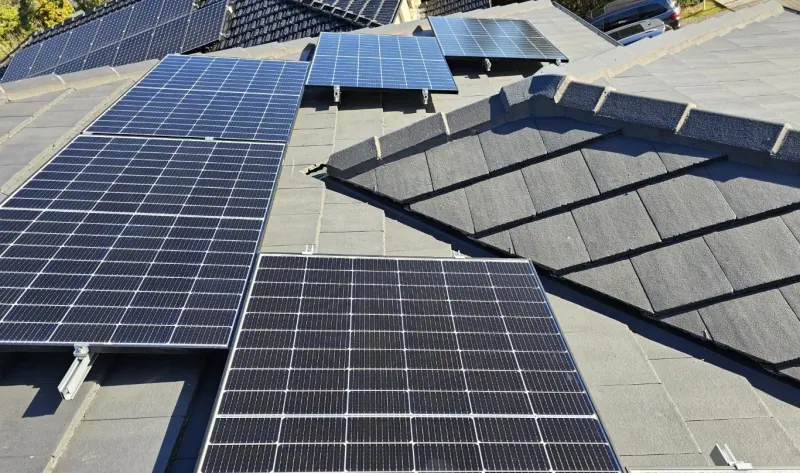
Only if the system can operate the solar equipment safely within the isolated backup system. Some designs supply stored battery energy but leave existing solar offline. Others can generate and charge during an outage, subject to sunshine, loads and controls. Ask whether the system can restart after reaching low charge and what conditions are needed; recharge and black-start behaviour should be demonstrated at handover.
Questions to ask before accepting a quote
- Is backup included, and what isolation equipment and circuit rewiring are priced?
- Which circuits and phases work, and which appliances should stay off?
- What are continuous and peak backup outputs and their duration?
- What reserve is configured, and how can I safely change it?
- Can my existing solar charge during an outage, and can the system restart from low charge?
- What transfer time, commissioning test, monitoring and support are included?
Use the 10kWh versus 20kWh comparison, 6.6kW and 10kW sizing guides for capacity decisions. Our battery retrofit guide and battery storage assessment cover the next step.
Frequently asked questions
Does every battery include blackout backup?
No. Confirm the complete backup equipment, installation scope and supported circuits before purchase.
How long will a solar battery last during an outage?
It depends on charge when the outage begins, the discharge floor, losses and average demand. The calculation above shows one set of assumptions; it is not a fixed runtime claim.
Is whole-home backup the same as going off-grid?
No. Outage backup for a grid-connected home does not establish suitability for prolonged low solar generation or permanent off-grid operation.