Shingled vs Monocrystalline Panels: Which Solar Technology Is Right for You?
The solar panel market is expanding rapidly, offering consumers a range of choices when it comes to solar technology. Among these choices, shingled vs monocrystalline panels are two of the most popular options. But which one is the best fit for your home? If you’re trying to decide which solar technology will provide the most efficiency, aesthetics, and durability, you’re not alone. Understanding the differences between shingled vs monocrystalline panels is essential to making an informed decision.
This article explores a solar technology comparison to guide you through the features, benefits, and drawbacks of both solar panel types. Whether you're interested in maximizing your home’s energy output, achieving sleek aesthetics, or ensuring long-term durability, this comparison will help you navigate the best choice for your home. Additionally, we'll cover new panel types emerging in the industry, so you can stay ahead of the curve in solar technology.
What Are Monocrystalline Solar Panels?
Monocrystalline panels are made from a single continuous crystal structure, which gives them their distinct dark, uniform color. They are one of the most efficient types of solar panels available today, with efficiency rates reaching up to 22%. These panels are made by slicing a large crystal of silicon into thin wafers, and each wafer forms a solar cell.
Key Benefits of Monocrystalline Panels:
- High Efficiency: Monocrystalline panels boast the highest energy efficiency, up to 22%. This is due to the high purity of the silicon used in the manufacturing process.
- Longevity: Monocrystalline panels are highly durable, with lifespans typically exceeding 25 years.
- Space Efficiency: Their high efficiency allows you to generate more power in a smaller area, making them ideal for homes with limited roof space.
Ideal Use Cases: Monocrystalline panels are best for homeowners who want to maximize power generation in a limited space. They’re also a good choice for urban environments where roof space is at a premium.
What Are Shingled Solar Panels?
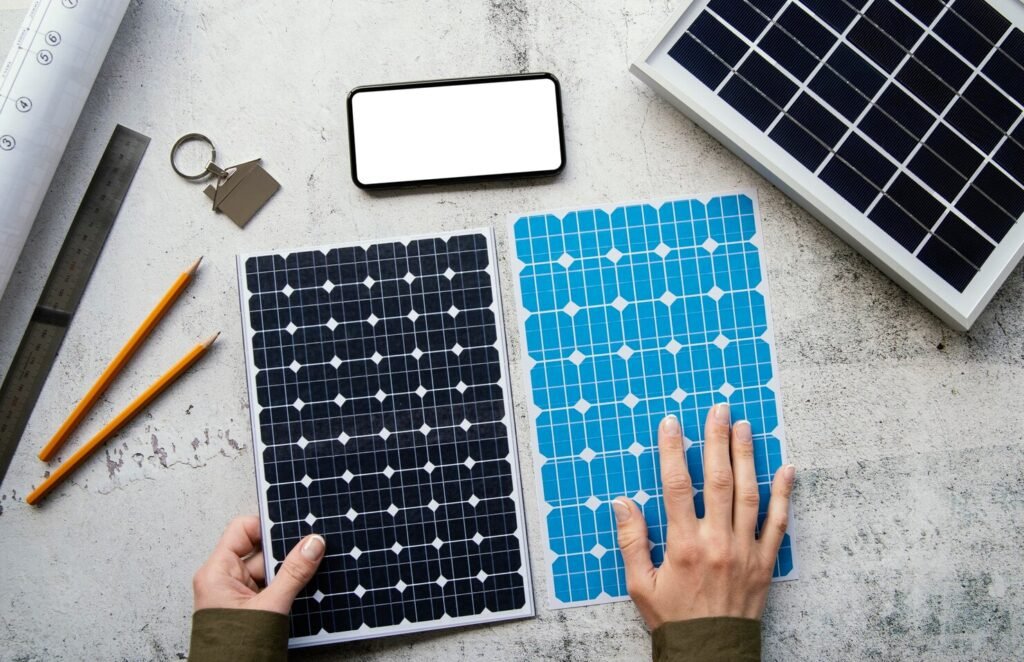
Shingled solar panels represent an innovative approach to solar panel design. Rather than using traditional busbars to connect individual cells, shingled panels employ an overlapping design, where the cells are arranged like shingles on a roof. This unique design offers several benefits over traditional panels.
Key Benefits of Shingled Panels:
- Improved Efficiency: By reducing the gaps between solar cells, shingled panels can achieve better overall efficiency compared to traditional panels, especially in low-light conditions or partial shading.
- Better Shading Performance: The unique design minimizes the impact of shading, so shingled panels continue to generate power even when parts of the panel are covered in shade.
- Aesthetic Appeal: Shingled panels provide a sleek, black, seamless design that’s aesthetically pleasing and blends well with most roof types.
- Durability: The interlocking cells are less likely to suffer damage from external forces, increasing the durability of shingled panels.
Ideal Use Cases: Shingled panels are a great choice for homeowners who are concerned with aesthetics or those living in areas with partial shading. Their ability to continue generating power even under shaded conditions makes them a strong contender for shaded rooftops.
Side-by-Side Comparison: Shingled vs Monocrystalline Panels
Now that we’ve explored the features of each panel type, let’s compare the key characteristics of shingled vs monocrystalline panels.
Efficiency
- Monocrystalline: Monocrystalline panels are highly efficient, with some reaching up to 22% efficiency. This makes them a great choice for homes with limited roof space.
- Shingled: Shingled panels offer comparable efficiency, sometimes exceeding traditional monocrystalline panels due to reduced gaps between cells.
Aesthetics
- Monocrystalline: These panels are sleek and have a uniform design, but they lack the seamless, modern look of shingled panels.
- Shingled: Shingled panels provide a seamless, black design that blends more harmoniously with your roof, making them ideal for homeowners focused on aesthetics.
Durability & Shading Performance
- Monocrystalline: While monocrystalline panels are highly durable, they can suffer from shading issues. If a part of the panel is shaded, the output can be significantly reduced.
- Shingled: Shingled panels perform better under shading conditions due to the interlocking design, which allows the panels to continue functioning even when parts of the panel are covered.
Cost
- Monocrystalline: Monocrystalline panels are typically more affordable than shingled panels. Their time-tested technology makes them more widely available, often at a lower cost.
- Shingled: Shingled panels are a newer technology and tend to be more expensive, though their performance in shaded areas and aesthetic appeal can justify the extra cost for some homeowners.
Availability & Market Adoption
- Monocrystalline: Monocrystalline panels are widely available, and their established market presence makes them easy to find. They are produced by many well-known brands.
- Shingled: Although newer to the market, shingled panels are growing in popularity, particularly for premium installations. Leading brands like SunPower offer these panels.
The Future of Solar Technology: New Panel Types to Watch
As solar technology evolves, several new panel types are emerging that could further enhance the performance of solar systems. Here are a few exciting advancements to keep an eye on:
- Bifacial Panels: These panels capture sunlight on both the front and back sides, increasing overall energy generation.
- Thin-film Panels: While these panels are lightweight and flexible, they are generally less efficient than traditional panels like monocrystalline and shingled options.
- Solar Shingles: Solar shingles combine solar technology with traditional roofing materials, providing an aesthetic, integrated roofing solution that generates electricity.
At Esteem Energy, we pride ourselves on staying ahead of the curve by offering the latest in solar technology, including Trina, Tongwei, and HT panels.
Which Panel Should You Choose?
When choosing between shingled vs monocrystalline panels, it ultimately depends on your specific needs and preferences:
- Monocrystalline Panels: Ideal if you are looking for budget-friendly, reliable, and highly efficient panels for limited roof space.
- Shingled Panels: Perfect if you value aesthetics or need better shading performance for a roof with obstructions like trees or buildings.
- Hybrid Systems: For those wanting a blend of both technologies, you may want to explore a hybrid solution that combines the best features of both
Why Choose Esteem Energy for Your Solar Needs?
At Esteem Energy, we offer top-tier solar solutions that align with your needs and budget. Whether you’re interested in shingled vs monocrystalline panels, we provide a wide selection of premium panels, including Jinko, Trina, and Risen. Our team of SAA-accredited installers is committed to delivering efficient, long-lasting solar solutions. We also offer custom system sizing, with options like 6.6kW, 10.5kW, or 13.2kW systems, ensuring you get the perfect fit for your home.
Our 5-star service rating, fast installation, and long warranties ensure that you can count on us for a reliable, professional solar installation. We also comply with Australian standards, guaranteeing that your system is built to last.
Ready to Make the Switch?
At Esteem Energy, we help you choose the right solar technology tailored to your home and budget. Whether you’re drawn to sleek shingled panels or reliable monocrystalline options, our expert team ensures smooth installation and long-term performance.
Frequently Asked Questions
Q1. What are shingled solar panels?Shingled solar panels are an innovative type of solar panel where the cells overlap each other, creating a “shingle-like” design. This helps to reduce gaps, improve efficiency, and offer better performance under shading conditions.
Q2. Which is better: shingled or monocrystalline?Both types of panels have their advantages. Monocrystalline panels are known for their high efficiency and affordability, while shingled panels offer better performance in shaded conditions and a more aesthetically pleasing design. The best choice depends on your specific needs.
Q3. Are shingled panels worth the price?Shingled panels tend to be more expensive than monocrystalline panels, but they offer advantages in terms of aesthetic appeal, efficiency under shading, and durability. If these factors are important to you, the higher cost may be justified.
Q4. How do monocrystalline panels compare in efficiency to other types?Monocrystalline panels offer efficiency rates up to 22%, making them one of the highest-performing options available. They are more efficient than polycrystalline and thin-film panels.
Q5. Can shingled panels perform better in partial shading?Yes, shingled panels perform better under partial shading compared to traditional solar panels. Their unique design reduces the impact of shading on energy production.
Q6. Are monocrystalline panels more expensive than polycrystalline?Yes, monocrystalline panels are typically more expensive than polycrystalline panels due to their higher efficiency and the manufacturing process involved.
Q7. How long do monocrystalline panels last?Monocrystalline panels have a lifespan of 25 to 30 years, making them a long-term investment for your home’s energy needs.
Q8. Do shingled panels look better than traditional solar panels?Many homeowners prefer the look of shingled panels because of their sleek, seamless black design. This aesthetic quality makes them a popular choice for those looking for a modern, stylish appearance for their roof.